


Lucile Woods, an avid forest campaigner, has been working with environmental organisations in Brazil for quite some time. Her account of the situation casts light upon pressing issues in the Amazon rainforest.
‘I wouldn’t have got involved if I hadn’t moved to Manaquiri, a municipality in the Brazilian state of Amazonas,’ says Lucile. She goes on to explain how she has always been concerned about green matters but had not realised that due to humans’ inexhaustible appetite for meat, huge stretches of land across the globe are being cleared to make room for grazing pastures and crops. ‘In fact, about one million square kilometres of the Amazon rainforest has already been destroyed in the name of animal agriculture. Almost 60% of the forest can be found across Brazil while parts of it lie in Peru, Bolivia and 6 more countries in South America,’ Lucile explains. After the 1960s, trees were cut down to make way for the production of crops, initially intended for local consumption. Eventually, excessive agriculture started to take over; by the year 2000, more than 70% of clearance in the Amazon was reserved for cattle ranching.
‘Most people are not familiar with what is going on,’ says Lucile. ‘The vast majority of deforestation has occurred in Brazil, in the so-called Arc of Deforestation, which encompasses land cleared for farming, logging and soybean cultivation. When performed in private properties, cutting down trees is considered legal. As a matter of fact, according to the Brazilian Forestry Code, 20% of rainforest can be cleared under a licence provided by environmental agents.’ Between 2004 and 2010, annual forest loss was reported to have declined on account of law enforcement, satellite monitoring and pressure by environmentalists. Yet, the rate of annual loss seems to be accelerating with a vengeance. Regrettably, deforestation in the Brazilian rainforest doubled in January 2020, compared with the same month in 2019. According to scientists, deforestation may be reaching a tipping point, after which large-scale desertification of the Amazon will take place. This will inevitably impact the world climate and result in increased temperatures, degradation of freshwater systems and soil erosion.
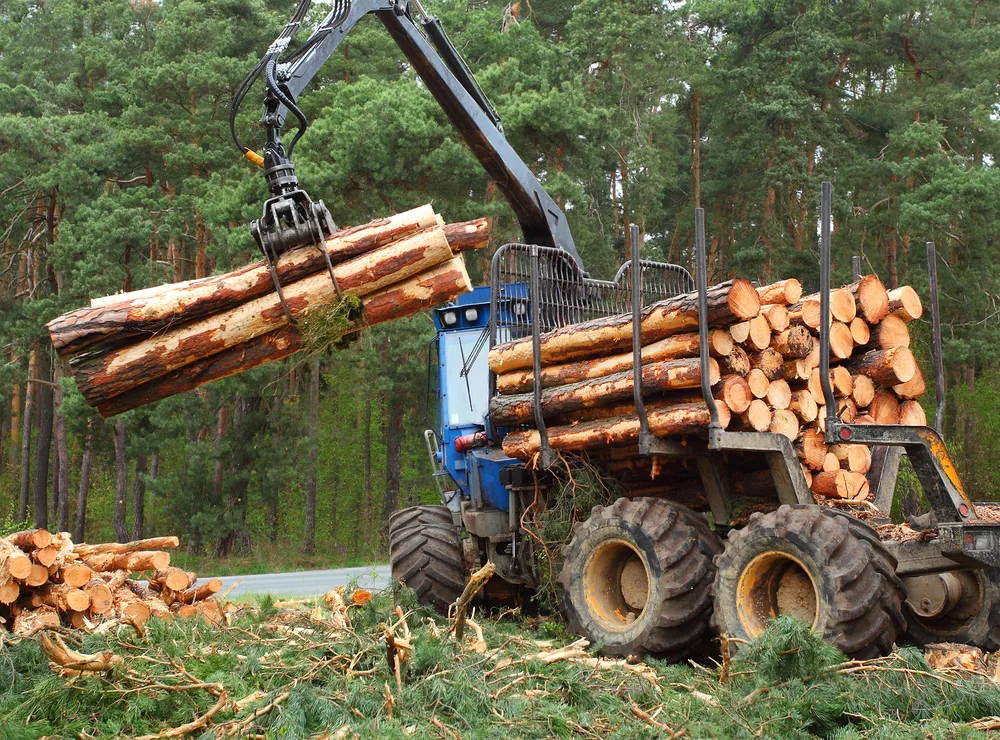
Forests appear to be threatened on a global level. The Amazon rainforest is not the only one losing its flora and fauna. Indonesia, for example, has already lost 70% of its forests, as vast areas have been cleared for agriculture, palm oil and paper production within the last fifty years. Eastern Africa and Eastern Australia, whose forests are overharvested for timber and converted for livestock and crops, are equally at risk. When remaining areas of undisturbed forest are threatened, it undermines the lifeline of many species that cannot withstand the impact of human activity. The effects of deforestation extend well beyond the forests themselves. Besides providing habitats to more than half of the world’s terrestrial species, they are also home to many indigenous people, who must defend their land against invaders. Native tribes stand up for their rights by mounting protests, pressuring governments and even forming alliances with environmental organisations.
One may wonder about what steps could be taken to counter the effects. ‘We live in an era of unprecedented environmental change and many efforts are being made to protect and reinstate forest ecosystems – efforts which may remain fruitless if we lack distinct definitions of forests,’ Lucile affirms. Unlike other organisations, the Food and Agriculture Organisation of the United Nations defines a forest as a combination of tree cover and land use. An area, for instance, where the tree cover has been temporarily removed as part of a forest management scheme or temporarily lost due to natural disturbances is still regarded as a forested area. Humans have undoubtedly exploited species and altered the demographic structures of forests, but the latter are also subject to diseases, adverse weather conditions and wildfires, which equally bear upon biodiversity. Should coordinated action be taken, forests can become more resilient to natural threats. In brief, if we are to bring down the rate of deforestation, effectual management and synergy will be required.
What lies behind rainforest destruction is the production of commodities that are, for the most part, exported to foreign countries. As companies seldom provide transparency regarding the origins and materials of their products, consumers remain unaware of their negative impact. However, in today’s tech world, there are ways to learn about unsustainable agriculture and illegal practices. If we knew that twenty times less land is required for planting crops than for producing meat, would we change our eating habits? Clearly, reducing one’s meat intake is a good first step. What is more, supporting local producers and opting for responsibly sourced products could go a long way towards curbing deforestation.
Despite being threatened, a very small percentage of forests is officially protected. Habitat conversion will result in forests being depleted and possibly becoming extinct unless they are taken care of. The 5th of September is Amazon Rainforest Day, reminding us of the urgency to reverse the situation. We can sign petitions and join protests demanding that governments do more. Individual efforts also matter, and we should take it upon ourselves to sensitise others, showing diligence. Understanding the value of rainforests and contributing to their conservation could lead to sustainable living – isn’t this in everyone’s best interest?
1. In the first paragraph, the writer’s purpose is to
A. pass judgment on human behaviour.
B. promote the town of Manaquiri.
C. provide a factual account of a situation. (correct answer)
D. draw attention to the importance of nature
2. What does ‘tipping point’ in the second paragraph mean?
A. a feeling of bitter disappointment
B. the time when an important or unstoppable change occurs (correct answer)
C. the beginning of a potential problem
D. the issuing of fair warning
3. What might be an obstacle to the restoration of forests?
A. the extent of the damage
B. environmental changes
C. natural sources of danger
D. our conception of forests (correct answer)
4. In the fifth paragraph, it is implied that consumers
A. are deliberately misguided. (correct answer)
B. are not interested in sustainability.
C. possess very little purchasing power.
D. are partly responsible for forest destruction.
5. According to the writer, rescuing forests comes down to
A. working collectively. (correct answer)
B. dealing with natural forces.
C. relying on governments.
D. having several plans.
6. The writer seems to
A. be distrustful of governments’ actions.
B. be cautiously optimistic. (correct answer)
C. have little hope that the situation will change.
D. believe that everyone will make a difference.