
Do your students often pull an all-nighter? Do they know that good sleep pat-terns can improve concentration and reduce stress? Have they understood that if they sit an exam while they’re exhausted, they will have a much harder time recalling the information they need to earn a high score? Do they know that the ever-present glow of their mobile phones can ruin their sleep?
Celebrating World Sleep Day with your students can be super easy and fun. Let us help you with a few ideas!
______________________________________________________________
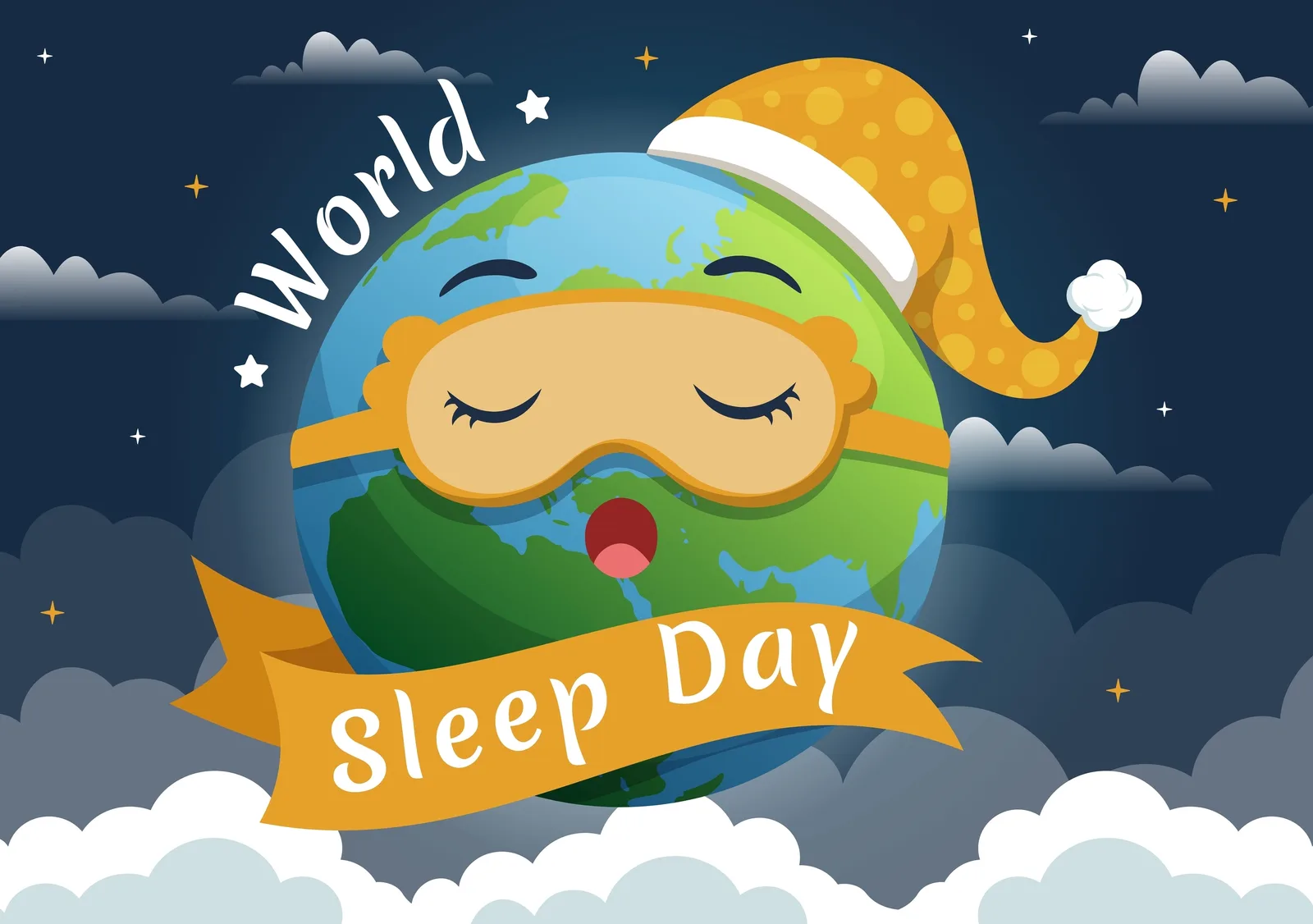
Happy World Sleep Day! 💤
Start with some questions about sleeping… But instead of giving your stu-dents questionnaires with complete questions, give them some prompts and explain that they will have to use them to come up with their own complete questions!
Your prompts could be easy words, phrasal verbs and simple phrases (for young students and beginners) or idioms and proverbs (for older students at upper intermediate level) such as:
🔹 oversleep 🔹 sleepwalk 🔹 snore 🔹 nightmare 🔹 night owl 🔹 sleep like a baby 🔹 drop off 🔹 take a nap 🔹 snooze 🔹 sleep hygiene 🔹 sleep deprivation 🔹 sleep disorder 🔹 sleep like a log 🔹 hit the sack 🔹 not sleep a wink 🔹 in-somnia 🔹 burn the candle at both ends 🔹 somnambulism
The questionnaires of your students can become an excellent lead-in to a lively discussion about good sleep patterns. Start the discussion with a sim-ple question such as:
🔹 Did you sleep well last night? 🔹 How many of you usually stay up late at night? 🔹 How many of you hate getting out of bed early in the morning? 🔹 Why do we need sleep and how much sleep do you think you need? 🔹 Do you count sheep if you can’t get to sleep? 🔹 Do you think that an untidy bed-room can have the same effect on your sleep as stress does? 🔹
✏️ tip: Don’t forget to give your English learners examples of useful lan-guage to introduce ideas, agree and disagree, compare ideas and draw con-clusions.
Finally, divide your students into pairs and explain that they have to find in-formation on the Internet in order to prepare a presentation on an interesting topic about sleep. For example, they could focus on ‘Fun facts about sleep that everyone should know’, ‘The best sleep apps’ or ‘How to balance sleep-ing and studying for exams’.
✏️ tip: Your students could share their presentations on social media using the hashtags #WorldSleepDay and #Eplaneteducation in order to let their family, friends and followers understand how good sleep patterns can benefit people everywhere.
That’s it! Projects like this one, which require teamwork and combine a WebQuest with a presentation or mock debate, make a change from the norm and help you to teach English and the four ‘super skills’ (aka communica-tion, collaboration, creativity and critical thinking) at the same time. And they can also help your students to analyse real information and become more engaged in the classroom and more curious about the topic that is taught!
______________________________________________________________